
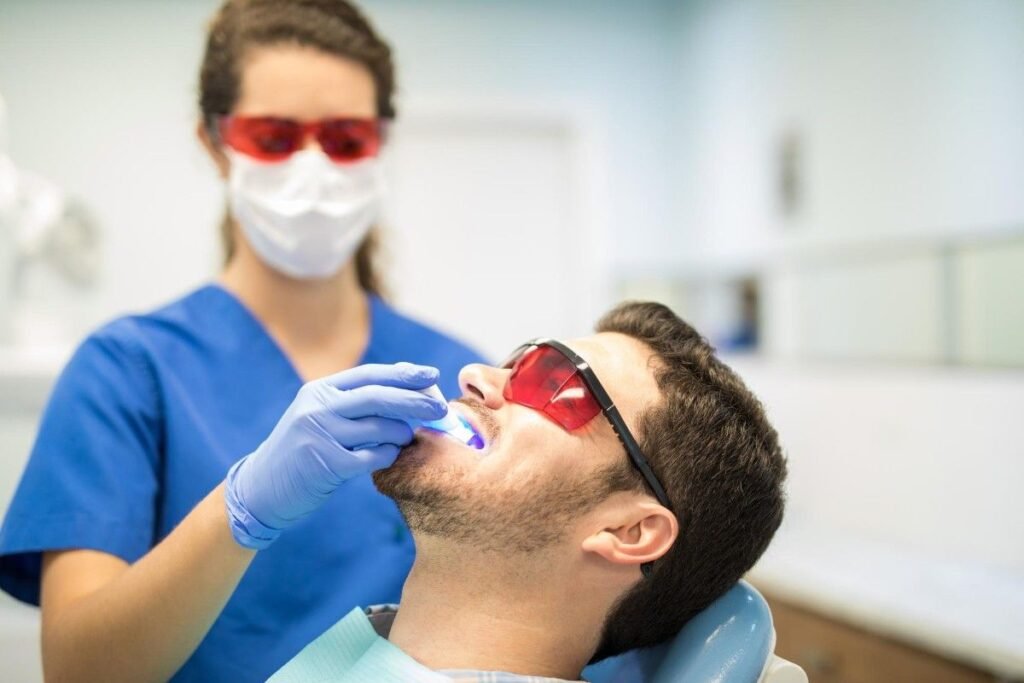
Have you noticed that one tooth looks noticeably darker than the rest of your smile? It’s a common concern, and one of the first questions people ask is, can you whiten a dead tooth once it starts to change color? The short answer is that a discolored tooth can often be treated, but the right approach depends on what caused the darkening in the first place. A dead or non-vital tooth behaves differently than the rest of your smile because it no longer has an active blood supply, which means standard over-the-counter whitening strips usually will not do the job.
In this guide, we will walk through why a single tooth can turn gray, brown, or almost black, and what a teeth whitening dentist typically looks at before recommending a solution. We will also cover the professional options available for restoring a more even, natural-looking smile, along with a few frequently asked questions patients bring up during their visits. If you are searching for guidance on this exact issue, this article should give you a clear picture of what is happening and what steps usually come next.
What Causes a Tooth to Turn Dark?
A tooth typically darkens because the inner layer, called the pulp, has been damaged in some way. The pulp contains nerves and blood vessels, and when it dies or becomes injured, blood and other byproducts can seep into the surrounding dentin, changing the tooth’s color from the inside out. This is very different from surface staining caused by coffee, tea, or tobacco, because the discoloration originates beneath the enamel rather than on top of it. That distinction matters quite a bit when it comes to choosing a treatment, since surface stains often respond to whitening products while internal discoloration usually does not.
There are several common reasons a single tooth might turn dark while the rest of your smile stays the same shade. Understanding the cause helps determine whether whitening, a restorative option, or a combination of treatments makes the most sense for your situation.
- Trauma or injury to the tooth, even one that happened years ago
- An untreated cavity that has reached the inner pulp
- A tooth that has previously undergone root canal therapy
- Aging, which naturally causes dentin to darken over time
- Certain medications taken during childhood, such as some antibiotics
- Excessive fluoride exposure during tooth development
Because the causes vary so widely, a dentist will usually take an X-ray and examine the tooth closely before recommending anything. This step helps rule out infection or further decay, both of which need to be addressed before any cosmetic work begins.
Can You Whiten a Dead Tooth?
So, can you whiten a dead tooth using the same products that work on the rest of your teeth? In most cases, standard whitening gels and strips are designed to lift stains from the outer enamel, which means they have little to no effect on discoloration coming from inside a non-vital tooth. That said, whitening is not entirely off the table. Dentists have specific techniques designed for exactly this kind of situation, and many patients do see meaningful improvement with the right approach.
Internal Whitening vs. External Whitening
There are actually two different approaches worth understanding here, and they work in very different ways.
External whitening applies a bleaching agent to the surface of the tooth, similar to how a general teeth whitening dentist would treat the rest of your smile. This method can sometimes lighten a dead tooth slightly, but results tend to be limited and short-lived because the discoloration is coming from within.
Internal whitening, sometimes called “walking bleach,” is a technique used specifically for teeth that have already had root canal therapy. A dentist places a whitening agent inside the tooth’s pulp chamber and seals it temporarily, allowing the agent to work from the inside out over several days. This method tends to produce more noticeable and longer-lasting results for non-vital teeth compared to surface treatments alone.
Professional Treatment Options for a Discolored Tooth
When whitening alone is not enough, or when the tooth needs additional structural support, your dentist may recommend one of several restorative options. Each one addresses discoloration in a slightly different way, and the right choice usually depends on the extent of the damage, the tooth’s overall strength, and your personal preferences for how the final result should look and feel.
Before jumping to a specific treatment, it helps to know that many patients benefit from an initial evaluation focused on cosmetic dentistry, since this allows your dentist to compare several options side by side and explain the pros and cons of each one for your specific tooth.
- Internal (walking) bleach for teeth that have had root canal therapy
- Porcelain veneers to cover the front surface of the tooth
- Cosmetic dental bonding to mask discoloration with tooth-colored resin
- A dental crown for teeth that need both a color fix and structural reinforcement
Each of these approaches can restore a more even smile, but they are not interchangeable. A tooth with significant structural damage, for example, may need more than a thin veneer to hold up over time, while a tooth with mild discoloration and no other issues might do just fine with a simple bonding treatment.
When a Root Canal Comes Into Play
If your dark tooth has never been treated and the pulp is infected or dying, your dentist will likely need to perform root canal therapy before any whitening or cosmetic work takes place. This step removes the damaged tissue, addresses any infection, and stabilizes the tooth so that it does not continue to darken or cause pain. Once the root canal is complete, internal whitening or a restorative cover, such as a crown, can then be planned to match the tooth to the rest of your smile.
Skipping this step is not advisable, since covering a tooth with a veneer or crown before addressing an underlying infection can lead to further complications down the road. Your dentist will always prioritize the health of the tooth first, with the cosmetic outcome following close behind.
What to Expect During a Consultation
If you are considering treatment for a dark tooth, your first visit will typically start with a conversation about how long you have noticed the discoloration and whether you recall any injury or dental work involving that tooth. Your dentist will then take a close look, often supported by an X-ray, to understand what is happening beneath the surface before recommending next steps.
From there, your dentist will walk you through the realistic outcomes for each treatment option, including how long the process might take and what kind of maintenance, if any, is needed afterward. This is also a good time to ask questions about how the treatment will blend with your surrounding teeth, since matching shade and translucency is an important part of getting a natural-looking result.
- A visual exam and shade comparison with neighboring teeth
- X-rays to check for infection, prior root canal work, or decay
- A discussion of whitening versus restorative options
- A personalized recommendation based on your goals and the tooth’s condition
Every patient’s situation is a little different, which is why a one-size-fits-all approach rarely works well for a single discolored tooth. Taking the time to have a thorough evaluation upfront tends to lead to better, longer-lasting results.
Caring for Your Smile After Treatment
Once your tooth has been treated, whether through internal whitening, bonding, veneers, or a crown, a few simple habits can help the results last. Good oral hygiene remains just as important as before, since plaque and staining agents can still affect the surrounding natural teeth even if the treated tooth itself is more resistant to future discoloration.
Routine dental visits also play a big role in maintaining your results over time. Your dentist can monitor the treated tooth, check that any restoration remains intact, and catch small issues before they become bigger problems. Many patients find that pairing their treatment with regular teeth whitening touch-ups for the rest of their smile helps keep everything looking consistent.
- Brush twice daily and floss regularly to reduce new staining
- Limit foods and drinks known to cause discoloration when possible
- Keep up with routine dental cleanings and checkups
- Ask your dentist about touch-up options if you notice any shade changes
Conclusion
A single dark tooth can feel discouraging, especially when the rest of your smile looks healthy and bright, but the good news is that this is a common issue with several proven solutions. Whether the discoloration comes from an old injury, a previous root canal, or a cavity that reached the inner pulp, a proper evaluation can identify the cause and point you toward the most effective path forward, whether that is internal whitening, bonding, a veneer, or a crown.
If you have been asking yourself whether you can whiten a dead tooth, the best next step is a conversation with a dental professional who can examine the tooth and explain your options clearly. The team at Auburn Dental Smiles is here to help you understand what is happening with your smile and guide you toward a solution that fits your needs. Reach out today to request an appointment and take the first step toward a more even, confident smile.
Frequently Asked Questions
1. Can a dead tooth be whitened back to match my other teeth?
In many cases, yes, especially if the tooth has already had root canal therapy. Internal whitening techniques are designed specifically for this situation and often produce better results than surface whitening alone. Your dentist can evaluate the tooth and let you know if this approach is a good fit for your specific case.
2. Why did my tooth turn dark if it doesn’t hurt?
does not always cause discomfort right away. Old trauma, a slow-developing infection, or age-related changes can all cause gradual discoloration. It is still a good idea to have the tooth examined even if you are not experiencing any pain.
3. How long does internal tooth whitening take to work?
Internal whitening is usually done over the course of a few visits, since the whitening agent needs time to work from inside the tooth. Some patients notice improvement fairly quickly, while others need a couple of rounds of treatment for the best result. Your dentist will let you know what to expect based on how discolored the tooth is.
4. Will insurance help cover treatment for a discolored tooth?
Coverage depends on the specific treatment and your individual dental insurance plan, since some procedures are considered restorative while others are viewed as cosmetic. It’s a good idea to review your coverage details with our team so you understand your options before moving forward with treatment.
5. Is a crown always necessary for a dark tooth?
Not always. A crown is typically recommended when the tooth has significant structural damage in addition to discoloration, while a less invasive option like bonding or a veneer may be enough for a tooth that is otherwise healthy. Your dentist will recommend the option that best matches the condition of your specific tooth.


